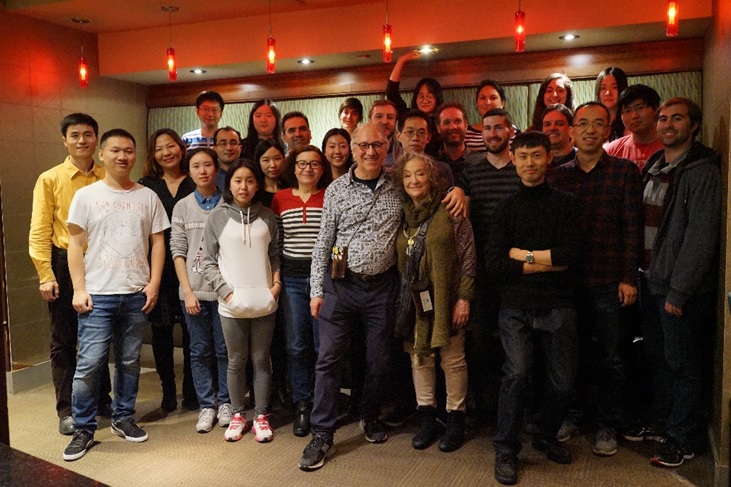
Congratulations Jia Jia!

Jia Jia has just learned she has won the much-coveted “Chinese Government Award for Outstanding Self-Financed Students Abroad” from the China Scholarship Council.

This award, founded by the Chinese government in 2003, recognises the academic excellence of self-financed Chinese students studying overseas.
The award selection panel considers
only students with outstanding performance in their PhD studies.
No more than 500 young talents all around the world win the award each year.

Well done Jia Jia

Posted in Uncategorized | Leave a comment

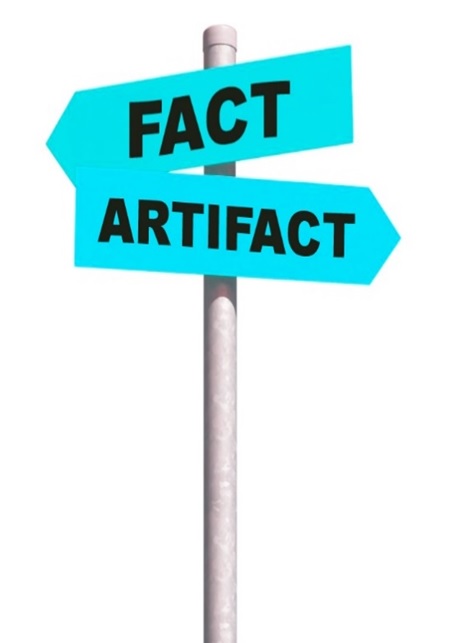
Nitrogen Reduction Reactions – Fact or Artifact

Artifacts that arise from adventitious carbon contamination of catalysts used in the electrochemical, photochemical and thermochemical reduction of CO2 to synthetic chemicals and fuels (www.advancedsciencenews.com), especially at low total conversions and low conversion rates, can only be authenticated through rigorous 13CO2 isotope-labeling proof-of-product experimentation to avoid the reporting of artifacts. Similarly, in the reduction of N2 to ammonia in aqueous solution using the aforementioned approaches, one must be equally diligent to apply strong checks to prevent the reporting of false-positives that can originate from impurities in the catalysts and N2 feed gas, and which require robust 15N2 isotope labeling to ensure unequivocal identification of the source of the ammonia.
Graphic image courtesy of Chenxi Qian.

The full article can be read on the Advanced Science News website.

Posted in Uncategorized | Leave a comment

Green Syngas by Solar Dry Reforming – Killing Two Greenhouse Gasses With One Stone

Congratulations Alex Tavasoli on your Commentary in Joule,”Green Syngas by Solar Dry Reforming: Killing Two Greenhouse Gases with One Stone”!
A photothermal dry reforming process has been developed that efficiently transforms two potent greenhouse gases, CH4 and CO2, into industrially valuable synthesis gas (a mixture of CO and H2), using a uniquely structured nickel-silica nanoscale catalyst that is impressively resistant to deactivation by coking. This exciting new discovery provides an opportunity to “kill two greenhouse gases with one stone.”

The full article can be read on the Joule website.

Posted in Uncategorized | Leave a comment

Congratulations to Yuchan and Kulbir!

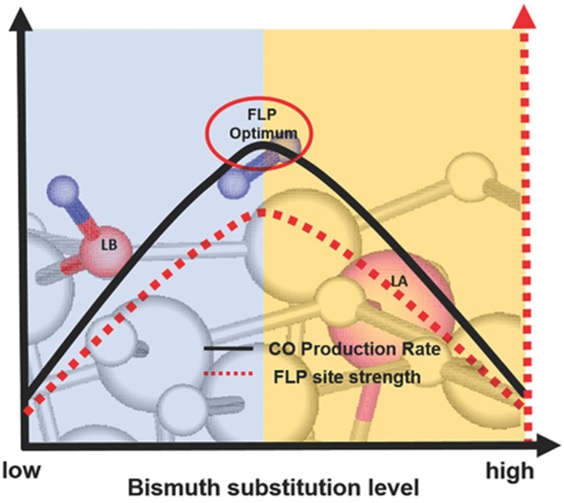
Congratulations Yuchan Dong and Kulbir Ghuman and Co-Authors on your Advanced Science Paper Entitled Tailoring Surface Frustrated Lewis Pairs of In2O3-x(OH)y for Gas-Phase Heterogeneous CO2 Hydrogenation by Isomorphous Substitution of In3+ with Bi3+
The excited state acidity and basicity of the surface frustrated Lewis pair, in oxygen vacancy and hydroxide defect-laden BizIn2-zO3-xOHy, can be chemically tailored, by controlling the level of isomorphous substitution of Bi(III) for In(III) in the Bixbyite crystal lattice. This makes it possible to optimize the catalytic performance of the solar powered reverse water gas shift reaction, CO2 + H2O –> CO + H2O.

The full article can be read on the Advanced Science website.

Posted in Uncategorized | Leave a comment

Congratulations to Ab Jelle!

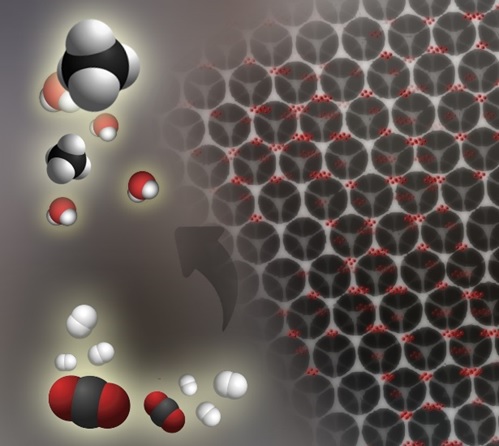
Well done Ab on your solar fuels paper published in Advanced Energy Materials, January 2018, where you demonstrate a highly efficient ambient temperature Solar Sabatier process whereby CO2 photomethanation is catalyzed by nanostructured RuO2 on a silicon photonic crystal support at the remarkable rate of 4.4 mmol gcat-1h-1. This exceptional photomethanation rate is due to the large surface area coupled with the unique light-trapping and broadband optical absorption properties of the photonic crystal support. Graphic illustration courtesy of Chenxi Qian.

More details about this study can be read here and the full article can be found on the Advanced Energy Materials website.

Posted in Uncategorized | Leave a comment

Solar Fuels Team – Breaking News

The U of T Solar Fuels Team has been selected as one of 20 semi-finalists from 160 applicant’s world wide, in the Ontario Center of Excellence Solutions 2030 Challenge Phase 1 competition, to find technological solutions to the greenhouse gas emissions problem in Ontario.

The strategy proposed by the solar fuels team focuses on the development of light-powered processes for the conversion of  CO2 to synthetic fuels, via gas-phase heterogeneous hydrogenation photocatalysis. This goal of the project is to transition a laboratory CO2-to-fuels prototype to a scaled-up CO2-to-fuels demonstration unit.

Eight winning teams from Phase 1 will receive up to $250,000 in Phase 2 with 10 months to reduce their proposed solution to practice. The winning team in Phase 2 will be eligible for up to $3,000,000 Phase 3 funding to bring their transformative technology to market. The mandate of the Solutions 2030 Challenge is for winning teams and industry to collaborate and envision a path forward to tackle climate change in Ontario and around the world.

Posted in Uncategorized | Leave a comment

Pores for Thought: Stand Up and Be Counted

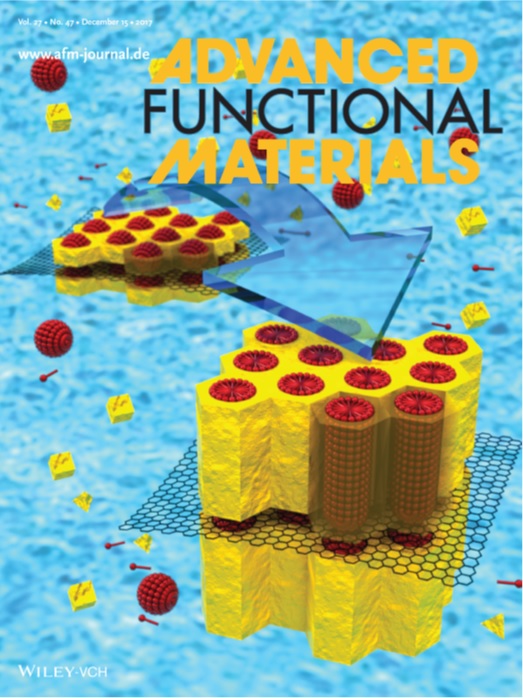
Zheng-Min Wang, Wendong Wang and Geoffrey Ozin have discovered a synthetic pathway to a sandwich-type nanocomposite of reduced graphene oxide and periodic mesoporous silica in which mesochannels of silica vertically align with respect to the graphene layers with tunable mesochannel depth and size. Deep insight into the formation mode of this novel class of materials obtains from a high photon flux small angle X-ray scattering technique and zeta potential-based solution chemistry, Advanced Functional Materials 2017, DOI: 10.1002/adfm.201704066

A summary of this work can be read here.

Posted in Uncategorized | Leave a comment

UofT’s Solar Fuels Cluster: Where Did We Come From and Where are We Going?

To wrap up 2017, a summary of the Ozin group’s past, present, and future work is presented. Our work from Si nanocrystals, to our transition into solar fuels, and our vision of a circular carbon economy can be read here.

Posted in Uncategorized | Leave a comment

Congratulations Anabelle!

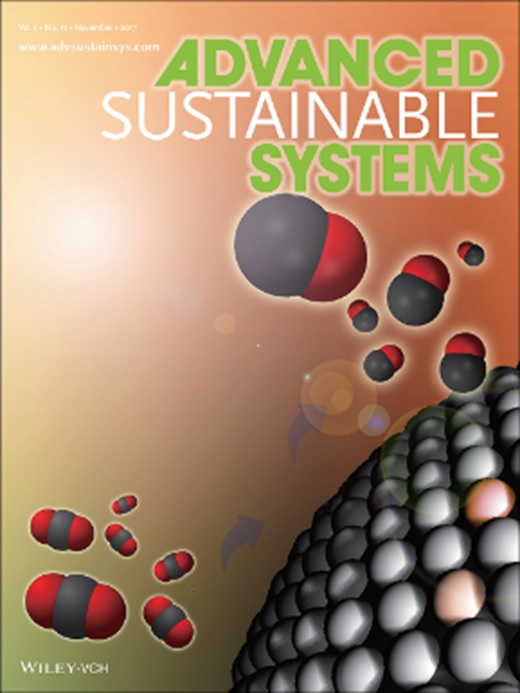
Well done Annabelle, Wei and Chenxi, Ab, Yuchan and Ziqi on your front cover graphic illustration of your paper entitled Tailoring CO2 Reduction with Doped Silicon Nanocrystals published in The article can be read on the Advanced Sustainable Systems, 2017, 1(11), DOI: 10.1002/adsu201700118, where you demonstrate gas-phase CO2 reduction using hydride-terminated boron- and phosphorus-doped silicon nanocrystals, comprised of earth-abundant, low-cost and non-toxic elements. The CO2 reduction activity of silicon nanocrystals doubled with the addition of dopants. Front cover graphic illustration courtesy of Chenxi Qian.

Posted in Uncategorized | Leave a comment

Solar fuel breakthroughs showcased in new art exhibit in Vienna

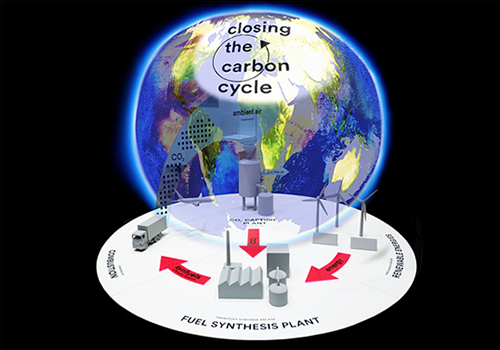
Austria’s Museum of Applied Arts in Vienna opening in December will showcase a diorama of Prof. Ozin’s vision of a closed carbon cycle.

More can be read on the University of Toronto website (I, II).

Posted in Uncategorized | Leave a comment