Jennifer I.L. Chen

jenny
Research project:
Fabricate TiO2 inverse opals for use as photocatalyst and study the effect of slow photons on the amplification of the photocatalytic efficiency

Contact:

Work: Dept. of Chemistry
University of Toronto
Lash Miller Building
80, St. George Street
M5S3H6 Toronto , Canada
Office: Room LM 328
Phone: 416-978-4735
Email: jchen@chem.utoronto.ca

Education:

  • 2004.9 ~ 2009.6 Ph. D. (Inorganic Chemistry, Prof. Geoff. A. Ozin) Department of Chemistry, University of Toronto, Toronto, Canada
  • 1999.9 ~ 2004.6 B.Sc. and Co-operative Education Department of Chemistry, Simon Fraser University, Burnaby, Canada

Awards and Scholarship

  • 2006-2008 NSERC – Postgraduate Scholarship – Doctoral’s
  • 2006 Chorafas Foundation Prize
  • 2006 Materials Research Society Graduate Student Silver Award
  • 2006 F. E. Beamish Prize in Inorganic Chemistry
  • 2004-2006 NSERC Canada Graduate Scholarship – Master’s
  • 2004 University of Toronto Fellowship
  • 2004 Society of Chemical Industry Merit Award
  • 2004 Research Education for Undergraduates Award, National Science Foundation
  • 2003 Simon Fraser University Chemistry Award
  • 2002, 2003 NSERC Undergraduate Student Research Award
  • 2002 Chemical Institute of Canada Achievement Award
  • 2002-2004 Simon Fraser University Open Scholarship
  • 1999-2001 Simon Fraser University Dean’s Scholarship in Faculty of Science

List of publications:

  • J. I. L. Chen, G. von Freymann, V. Kitaev, and G. A. Ozin, “Effect of Disorder on the Optically Amplified Photocatalytic Efficiency of TiO2 Inverse Opals” J. Am. Chem. Soc. 2007, 129, 1196-1202.
  • J. I. L. Chen, G. von Freymann, S. Y. Choi, V. Kitaev, and G. A. Ozin, “Amplified Photochemistry with Slow Photons” Adv. Mater. 2006, 18, 1915-1919.
  • A. C. Arsenault, D. A. Rider, N. Tetrault, J. I. L. Chen, N. Coombs, G. A. Ozin, and I. Manners, “Block Copolymers under Periodic, Strong Three-Dimensional Confinement” J. Am. Chem. Soc. 2005, 127, 9954-9955.
  • H.-Y. Guo, J. I. L. Chen, A. S. Arrott and Z.-G. Ye, “Enhanced ferroelectricity and ferromagnetism in La1-xBixCrO3 by Bi3+- substitution” J. Mater. Res. In press (2007).
  • J. I. L. Chen, and Z.-G. Ye, “Citrate-Nitrate Combustion Route to the Synthesis of LaCrO3 – BiCrO3 Solid Solution” J. Mater. Sci. In press. (2007).
  • J. T. McCann, J. I. L. Chen, D. Li, Z.-G. Ye, and Y. Xia, “Electrospinning of Polycrystalline Barium Titanate Nanofibers with Controllable Morphology and Alignment” Chem. Phys. Lett. 2006, 424, 162-166.
  • J. I. L. Chen, M. Mahesh Kumar, and Z. –G. Ye, “A New Ferroelectric Solid Solution System of LaCrO3-BiCrO3” J. Solid State Chem. 2004, 177, 1501-1507.
  • J. I. L. Chen, and Z.-G. Ye, “Ferroelectricity in La1-xBixCrO3 Solid Solutions” Ferroelectrics: Proceedings of the 10th European Meeting on Ferroelectricity 2004, 301, 175-177.

Extracurricular Activities:

Piano, badminton and skiing

Posted in Group Members | Leave a comment

Leonardo Da Silva Bonifacio

leo

Research project:

Study and manipulation of Mesoporous Bragg Reflectors surface properties

Contact:

Work: Dept. of Chemistry
University of Toronto
Lash Miller Building
80, St. George Street
M5S3H6 Toronto , Canada
Office: Room LM 328
Phone: 416-978-4233
Email: lbonifac@chem.utoronto.ca

Education:

  • 2006 – present – PhD Candidate, University of Toronto Supervisor: Prof. Geoffrey A. Ozin
  • 2005 – 2006 – M. Sc. in Chemistry, University of Sao Paulo, Brazil Supervisor: Prof. Dr. Henrique Eisi Toma
  • 2001 – 2004 – B. Sc. in Chemistry, University of Sao Paulo, Brazil; B. Ed. in Chemistry, University of Sao Paulo, Brazil

Awards and Scholarships:

  • 2006 – present – University of Toronto Fellowship
  • 2006 – 1st prize on the ABRAFATI / PETROBRAS award on Science of Pigments
  • 2005 – 2006 – The State of São Paulo Research Foundation (FAPESP) graduate research scholarship
  • 2004 – Regional Council of Chemistry (CRQ-IV) award for the best research essay on chemistry;
  • 2003 – 2004 – The State of Sao Paulo Research Foundation (FAPESP) undergraduate research scholarship

Publications

  • Bonifacio L.D., Puzzo D.P., Breslav S., Willey B.M., McGeer A., Ozin G.A., Adv. Mater. (2009), in press;
  • O’Brien P, Puzzo D.P., Chutinan A., Bonifacio L.D., Ozin G.A., Kherani N.P., Adv. Mater. (2009), in press;
  • Hou K, Puzzo D, Helander MG, Lo SS, Bonifacio LD, et al., Adv. Mater. (2009) 21, 2492;
  • Puzzo, DP; Bonifacio, LD; Oreopoulos, J, et al., J. Mater. Chem. (2009) 19, 3500;
  • Bonifacio, LD; Lotsch, BV; Puzzo, DP, et al., Adv. Mater. (2009) 21, 1641;
  • Bonifacio LS, Gordijo CR, Constantino, VRL, et al., J. Nanoscience and Nanotechnology (2008) 8, 274-279;
  • Nunes F.S., Bonifacio L.D., Araki K., Toma H.E., Inorg. Chem., (2006) 45, 94–101;
  • Toma H.E., Bonifacio L.D., Anaissi F.J., Quimica Nova (2005) 28, 897-900

Book Chapters

  • Bonifacio LD, Lotsch, BV, Ozin GA, “Periodic Mesoporous Materials: Holes Filled with Opportunities”, Comprehensive Nanoscience and Nanotechnology, in press (2009);

Teaching Experience

  • 2009 – CHM 139 – Physical Principles – Tutor;
  • 2009 – CHM 139 – Physical Principles – Lab Demonstrator;
  • 2008 – CHM 434 – Solid State Chemistry – Tutor;
  • 2007/2008 – CHM151 – Chemistry: the Molecular Science – Tutor;
  • 2007 – CHM 139 – Physical Principles – Lab Demonstrator;
  • 2006 – Foundations of Chemistry: Structure – Lab Demonstrator;
  • 2005 – Foundations of Spectroscopy and Spectroscopic Methods – Tutor;

Conference Contributions

  • Poster – “Pilling Nanomaterials: Porous One Dimensional Photonic Crystals”, Spring MRS, 2009, San Francisco-CA, USA;
  • Poster –  “The Colors of Gold Nanoparticles Supported on Hydrotalcite” 37th International Conference of Coordination Chemistry, 2006, Cape Town, South Africa;
  • Oral Presentation –  “Influence of N-heterocyclic Ligands on the Aggregation and Fusion of Gold Nanoparticles” IV Brazilian Material Research Society Meeting October 2005, Recife – PE, Brazil
  • Expositor –  Nanotec Expo 2005 – International Exposition of Projects, Products and Nanotechnological Materials July 2005, Sao Paulo – SP, Brazil.
  • Poster –  “Connecting Gold Nanoparticles to Pentacyanoferrates: The different roles of 2 and 4-mercaptopyridine” XII University of Sao Paulo International Undergraduate Symposium November 2004, Sao Paulo – SP, Brazil;
  • Poster –  “Interaction Light-Matter: Getting Inside the Lycurgus’ Cup” Institutional Chemistry Week 2004, Sao Paulo – SP, Brazil;
  • Poster –  “Synthesis and Characterization of the Novel Cluster [Ru3O(Oac)6(IsoQ)3]PF6”  XXVI Latin-American Chemistry Meeting, June 2004, Salvador – BA, Brazil;
  • Poster –  “Gold Nanoparticles Passivated by 4-Mercaptopyridine” XXVI Latin-American Chemistry Meeting, June 2004, Salvador – BA, Brazil;
  • Poster –  “Oxidation of 8-metoxi-2’-Deoxyguanosine by Singlet Oxygen: A Mechanistic Approach” XXXII Brazilian Society of Biochemistry and Molecular Biology Annual Meeting, May 2003, Caxambu – MG, Brazil


Extracurricular Activities

  • Purple Belt in Brazilian Jiu Jitsu (Amateur competition level)
Posted in Group Members | Leave a comment

Protected: Lab Safety Guideline – Must be Read, Reread and Adhered to in Practice

This content is password protected. To view it please enter your password below:

Posted in Lab Safety | Enter your password to view comments.

Ozin Curriculum Vitae and Award List

DEGREES

  • D.Phil. Inorganic Chemistry, Oxford University, Oriel College, 1967
    Title of Graduate Thesis: Chemical Applications of Vibrational Spectroscopy, Supervisor: Professor Ian. R. Beattie
  • B.Sc. Honours Chemistry, University of London, King’s College, 1965

ACADEMIC APPOINTMENTS

  • Tier 1 Canada Research Chair in Nanochemistry, University of Toronto, 2008-2021
  • Alexander von Humboldt Fellow, 2005-2007
  • Senior Fellow of Massey College, 2007
  • University of Toronto Distinguished University Professor, 2004-
  • University of Toronto, University Professor, 2001-2004
  • Canada Research Chair First Tier, University of Toronto, 2001-2007
  • Institute for Optical Sciences, University of Toronto, Founding Member, 2004-
  • Canadian Institute for Advanced Research, Fellow, Nanoscience, 1999-
  • Isaac Walton Killam Memorial Fellow, 1995-97
  • University of Toronto, Professor, 1977-2000
  • Caltech, Sherman Fairchild Fellow, 1977-78
  • University of Toronto, Associate Professor with Tenure, 1973-77
  • Tenure, University of Toronto, 1973
  • University of Toronto, Associate Professor, 1972-73
  • University of Toronto, Assistant Professor, 1969-72
  • Appointment University of Toronto Graduate School, 1969

VISITING ACADEMIC APPOINTMENTS

  • Distinguished Research Scientist, Karlsruhe Institute of Technology, Karlsruhe, Germany, 2010-2015
  • Guest Professor Karlsruhe Institute of Technology, Karlsruhe, Germany, 2005-2010
  • Guest Professor Karlsruhe Institute of Technology, Karlsruhe, Germany, 2005-2010
  • Guest Professor Center for Functional Nanostructures, Karlsruhe, Germany, 2005-2010
  • Guest Professor Institute for Nanotechnology, FZK, Karlsruhe, Germany, 2005-2010
  • Humboldt Fellow, Max Planck Institute for Colloid Science, Golm, Germany, 2005
  • External Associate London Centre for Nanotechnology, London 2004-2008
  • Honorary Professorial Fellow, Royal Institution, London, 2001-2008
  • Honorary Professorial Fellow, University College, London University, 2001-2008
  • 3M Research Fellow, 3M Corporation Minneapolis Saint Paul, 1982-85
  • Sherman Fairchild Fellow Caltech, 1977-78

PROFESSIONAL AFFILIATIONS

  • Fellow of the Royal Society of Chemistry
  • Fellow of the Royal Society of Canada
  • Member of the Canadian Chemical Society
  • Member of the American Chemical Society
  • Member of the British Chemical Society
  • Member of the Materials Research Society
  • Member of the American Association for the Advancement of Science

SYNOPSIS OF RESEARCH ACCOMPLISHMENTS

  • Five decades of innovative and transformative scientific and technological advances in nanocrystals and nanowires, nanoporous materials and nanophotonic crystals, nanocatalysts and nanomotors, for controlling electrons and photons, molecules and materials, in unprecedented ways, a genre of nanochemistry which shaped the course that nanoscience and nanotechnology is taking today.
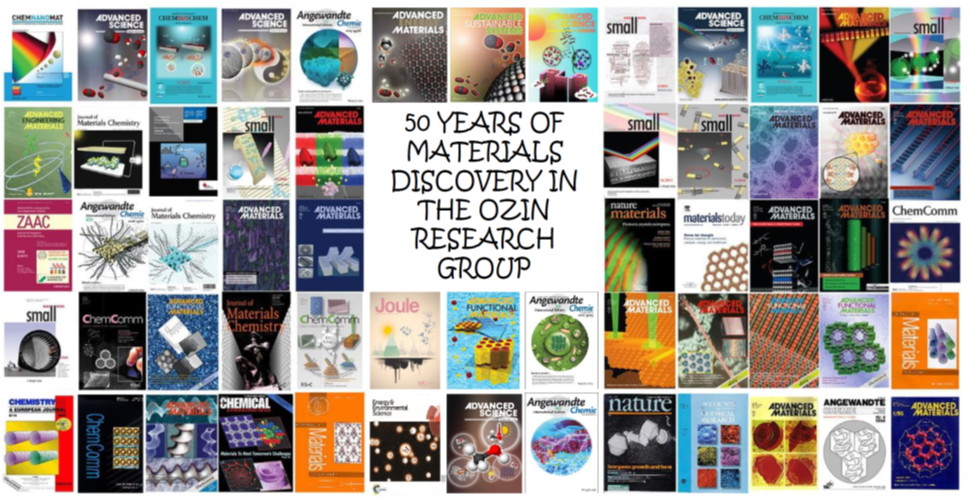
  • Published 793 papers with 32 in Science and Nature. ISI h index 108, Citations 49,411, Google Scholar h-index 120, Citations 63,106. Journal front covers for 59 papers. Portfolio of 54 patents filed and/or issued.
  • Wrote five gold standard undergraduate and advanced graduate textbooks on Cryochemistry, Nanochemistry, Carbon Dioxide and Energy Materials Discovery.
  • Trained a cadre of more than 300 top-rank students 50 of which have secured academic posts in universities around the world.
  • Generated a substantial portfolio of advanced materials and nanomaterials patents.
  • Co-founded Torrovap Industries Incorporated in 1985, a Toronto based spin-off company manufacturer of metal atom-cluster-synthesis-spectroscopy scientific instrumentation (www.Torrovap.com). Co-founded Opalux Incorporated in 2006, a Toronto spin-off company whose mission is to commercialize a portfolio of photonic crystal based products (www.Opalux.com). Co-founded Solistra in 2019, a Toronto based spin-off company developing high performance photocatalysts and photoreactors to turn CO2 in chemicals and fuels using the power of the sun (www.Solistra.ca). Co-founded ArtNanoInnovations in 2010, a partnership with American artist Todd Siler dedicated to taking advances in nanoscience and nanotechnology into the art world (www.artnanoinnovations.com).
  • Inaugural guest editor invited to write monthly Opinion Editorials for Advanced Science News (136 articles published), Wiley-VCH family of materials journals: Advanced Science, Advanced Materials, Advanced Functional Materials, Advanced Energy Materials, Advanced Health Materials, Advanced Optical Materials, Advanced Engineering Materials, Advanced Interfaces, Advanced Science, Small, Particle (www.advancedsciencenews.com/author/gozin/).
  • Investigator Brookhaven National Laboratory

HONOURS AND AWARDS

  • Alexander von Humboldt Award, 2018-2019
  • Solutions 2030 Challenge Award, Ontario Center of Excellence, 2018
  • Low Carbon Innovation Award, Ministry of Research, Innovation, Science, 2018
  • Best in Science Award, Ministry of Environment and Climate Change 2017
  • Connaught Innovation Award, 2017
  • World Technology Network, WTN, Energy Award 2016
  • Connaught Global Challenge Award 2015-2017
  • Canada Research Chair Tier I Third Term Renewal 2015-2021
  • Royal Society of Chemistry Centenary Prize 2015
  • Festschrift 70 Special Edition of CJC 2012
  • World Cultural Council Albert Einstein World Award of Science in Nanochemistry, 2011
  • Royal Society of Chemistry Barrer Award in Nanoporous Inorganic Materials, 2011
  • Inventor of the Year in Physical and Engineering Sciences at University of Toronto, 2011
  • Premier of Ontario Discovery Prize in Natural Sciences and Engineering, 2010
  • Canada Research Chair in Materials Chemistry and Nanochemistry, 2008-2014
  • Society of Chemical Industry Le Sueur Award, 2008
  • Alexander von Humboldt Award, 2005-2007
  • NSERC Inaugural Brockhouse Interdisciplinary Prize, 2004
  • UT Distinguished University Professor, 2004-
  • Institute for Optical Sciences, University of Toronto, Founding Fellow, 2004-
  • Canadian Institute for Advanced Research, Founding Fellow Nanoelectronics, 2003-2008
  • Royal Society of Chemistry Award in Materials Chemistry, 2002
  • CSC E.W.R. Steacie Award in Chemistry, 2002
  • UT University Professor, 2001
  • Canada Research Chair in Materials Chemistry and Nanochemistry, 2001-2007
  • Chemical Institute of Canada CIC Medal, 2001
  • Professorial Fellow RI-UCL, 2001
  • Canadian Institute for Advanced Research, Founding Fellow Nanoelectronics, 1997-2014
  • CSC Award, Pure or Applied Inorganic Chemistry, 1999
  • Isaac Walton Killam Memorial Fellowship, Canada Council, 1995-97
  • Fellow of Royal Society of Canada, 1992
  • RSC Rutherford Memorial Medal in Chemistry, 1982
  • CIC Alcan Award, Inorganic Chemistry, 1981
  • Coblentz Memorial Prize, Molecular Spectroscopy ASS, 1976
  • Meldola Medal Physical-Inorganic Chemistry, RIC, 1972
Posted in News | Leave a comment

Ozin Teaching Philosophy

geffandhisteacher(this story was written in 1998 by Geoffrey Ozin)

On entering university, the Zeitgeist of the middle of the 20th century was the excitement of science – space exploration, transistors, lasers and DNA were being discovered, and I began my obsession with chemistry. During my teaching and research I have realised the importance of taking a broader interdisciplinary approach, as I believe that future discoveries in science will be made at the boundaries of different research areas.

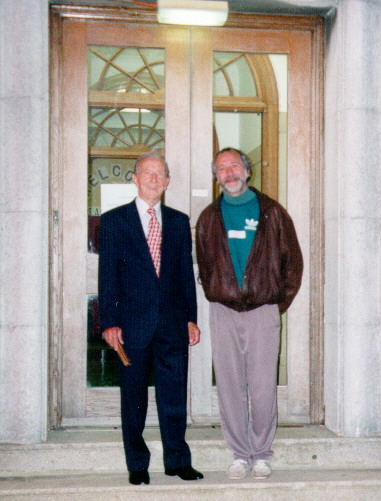
During a visit to England last year, the time happened to coincide with the 60th anniversary of the Hove Grammar School for boys in Sussex, where I began my higher level education and first real exposure to the subject of chemistry. I was glad to be with over 300 Old Boys whose age ranged from close to 100 to about 40, and whose professions ended up being quite diverse. Quite a few boys had actually become academics and I learned of some, who like myself, emigrated to Canada. There were also a suprising number of boys who had made their million pounds. It was quite an eye-opener for me to learn how the change-over from the grammar to the comprehensive school system, not long after I had gone up to university, had altered the system.  It saddened me to see how all the signs of an elite educational system had been purged from the school, including all the names of the boys who in my year, 1961, had been awarded State Scholarships to first rank universities, and who had been honoured with their names written in gold letters on a mahogany edifice.  The happiest recollection of all was the discovery that my chemistry teacher, Mr. Charles Whone-Brown, was still in excellent health.

He was my role model and remembered that I worked very hard.  I was lucky enough to be able to get a photograph of the two of us standing outside the front entrance of my grammar school in Hove.  It is incredible how fast 35 years have swept me by. This person inspired me to choose chemistry as my lifelong career.  He is a good example of the profound influence that a teacher can have on a student, and I have tried ever since to live up to his high standards in my own teaching and research career.

I obtained my undergraduate and postgraduate degrees at London and Oxford and was awarded an ICI postdoctoral fellowship to work on lasers in inorganic chemistry at Southampton University.  I happened to be a student in an inorganic materials chemistry laboratory, but I was always intrigued by the physical-theoretical under-pinnings of inorganic chemistry, challenged by the demands of having to master a multi-analytical approach for measuring the properties of materials, enchanted with the synthetic aspects of creating new inorganic compounds, and excited at the prospect of determining their structures for the first time.  During a stimulating four year research apprenticeship in the UK, I was exposed to a range of synthetic methods in main group aluminum, silicon, phosphorous and fluorine chemistry, and I learned how to handle gaseous, liquid and solid state materials under extreme conditions from cryogenic to high temperatures, and from low to high pressures.  Meanwhile, I was captivated by the revolution in the new physical methods for characterising inorganic materials, I studied how to usefully apply various spectroscopy, diffraction, microscopy, theoretical and computational techniques for solving diverse problems in inorganic chemistry.  This period of time for me was inspiring, it served to cement my research interests in inorganic chemistry.

I have always viewed teaching and research in chemistry from an integrated inorganic-physical perspective, and my personal research philosophy has been to embrace whatever physical and chemical methods were available and suitable at the time, to solve the particular problem at hand.  My mentors and role models were outstanding teachers and researchers.  These scholars inspired me to search continuously for high quality, significant, and timely scientific questions, they taught me the importance of seeing the relevance of one’s discoveries, they exposed me to the vitality of working at the forefront of a research field.  My future was set to be an academic inorganic chemist.  In 1969 I received an offer of an assistant professorship in inorganic chemistry at the University of Toronto.  This provided me with the opportunity to inspire students in my lecturing, to develop the imagination, creativity, knowledge and skills of students in my research.  I took on this task with gusto and joy, it was a major responsibility and a great honour to be able to contribute to the education, training, and eventually the careers of many highly skilled chemists in Canada.

Over the past thirty years of my teaching chemistry at the University of Toronto, with a particular emphasis on inorganic and materials chemistry, the paradigm of the field has undergone dramatic changes and the knowledge base has exploded.  Inorganic textbooks of the day have changed from covering classical subjects like atomic and molecular structure, bonding theories, periodicity, spectroscopic methods, co-ordination compounds, ligands and stereochemistry, magnetism, reaction kinetics, thermodynamics and stability, and theoretical aspects, to stressing instead the importance of synthesis, particularly of organometallic, polymeric and solid state materials and their relevance to a wide variety of application areas.  Modern day inorganic chemistry now traverses the boundaries of biology, medicine and physics as seen by the rapid growth of bioinorganic and inorganic materials chemistry.  This significant shift in emphasis of the subject matter is reflected in modern inorganic textbooks, and is no doubt the correct response to the developments that have taken place over the past thirty years.

I have always been cognisant, throughout my almost three decades of teaching chemistry to undergraduate and graduate students at the University of Toronto, of the continuously changing face of the field of chemistry.  Consequently, I have assigned a high priority to remaining current in my organisation and presentation of the inorganic chemistry curriculum, all the way from the introductory first year to the advanced graduate chemistry lecture and laboratory courses that I have taught.  I have tried to be at the leading-edge of my field of inorganic research, and to accurately reflect the knowledge and excitement of the times in my lectures at every level, to inspire students about the amazement of chemistry, and to prepare them in the best possible way for the challenges that they will ultimately experience in the 21st. century.  It is my job as a teacher and researcher to transmit, as accurately as possible, the necessary background and current knowledge of the field, from the fundamental scientific principles to the technological relevance of the subject, in such a way that excites, inspires and motivates students, to get them to see that the revolution is in chemistry, and that they should seriously consider chemistry as a career.  I continue to learn from my teaching and teach to learn.  This is my integrated teaching-research perspective of chemistry and it appears to have served both students and myself well over my years at the University of Toronto.

Throughout my tenure in the Chemistry Department, I have taught a great variety of chemistry subjects and courses at all levels.  The breadth and depth of my undergraduate and graduate teaching contributions on both the St. George and Erindale campuses over the years, can be appreciated from inspection of the attached listing of my teaching assignments.  I have re-vamped and taught introductory chemistry to physical scientists for five years, conceived and established entirely new second and third year inorganic chemistry courses and laboratories, created new advanced courses in cryochemistry, vibrational spectroscopy, paramagnetic resonance, symmetry, structural methods, and introduced, for the first time, modern materials chemistry and physical methods in materials chemistry, into the chemistry curriculum.  The student evaluations of my teaching have generally been most positive.

I am especially delighted with the success of the inorganic materials chemistry program in the Chemistry Department since I introduced the subject more than a decade ago.  The impressive growth and maintenance of undergraduate and graduate student numbers and interest in inorganic materials chemistry has stimulated the department to greatly expand its commitment in materials teaching, from the original fourth year course, to inject new materials topics into the first, second and third year inorganic chemistry courses, to include a new third year polymer-materials course as well as various graduate level courses in polymer and inorganic materials chemistry.  This success has led to a significant increase in the complement of materials oriented research faculty in the chemistry department.

The cornerstone of my teaching and research in the rapidly expanding and vitally important area of materials chemistry is the design and synthesis of materials with new and improved properties.  An important message to transmit to students, is how this knowledge will enable the development and manufacture of enhanced performance products and processes based upon the unique structures and properties of these materials.  It is central to Canada’s technological and socio-economic future that students be cognisant of, and trained, in the modern strategies of synthesising, characterising and studying the relationships between the structures, properties, and functions of a diverse range of materials classes.  Training in state-of-the-art solid state analytical and computational methods is an important co-requisite for teaching students how to make meaningful advances in materials chemistry and for remaining competitive in the field.  I constantly impress upon students the synergy between materials chemistry and other fields, as a means to stimulate meaningful collaboration and to solve challenging multidisciplinary problems, while injecting insight and inspiration into materials research.  I like to convey the idea that chemistry is the central science and that materials chemistry is a rapidly emerging subdiscipline of chemistry.  It is a highly interdisciplinary field with great intellectual challenges and enormous practical consequences.  Students learn that the knowledge and new classes of materials that are growing out of this fledgling branch of chemistry are now impacting research and development in physics, engineering, molecular biology, biomaterials, biotechnology, geology, metallurgy, environmental, computational and materials science.  I always try to convey the excitement that materials research is the area of chemistry which creates the new materials, upon which the products and processes of tomorrow’s high technology society will depend.

In my materials courses the students learn that in order to respond to the global needs of advanced materials in the 21st. Century, chemists have had to change their way of thinking about the synthesis, structure, property relationships of solid state materials.  Students soon discover that the synthesis paradigm is swinging away from a traditional “heat-and-beat, shake-and-bake” haphazard type of solid state chemistry, moving instead towards a contemporary “chemie douce, turning-down-the-heat” kind of soft chemistry, where the central tenet is the “intentional design” of materials.  I am placing less emphasis on the classical inorganic solid state approach to electronic, optical, photonic, magnetic, dielectric, catalytic, separation, sensory, and mechanical materials, as these methods will not likely be able to address the performance requirements of advanced materials for the future.  Instead I am beginning to introduce the student to the idea of materials synthesis based upon molecular design and organised self-assembly.  Thus, as synthetic chemists are learning how to build well beyond the molecule, materials chemists are developing skills in molecular and crystal engineering.  I like students to experience this modern trend towards “synthesis-with-construction” and “molecular tectonics”, a new approach to for example, supramolecular, polymeric, porous and composite materials.  Students are confronted with, and excited by, the current thrust towards the design of intelligent materials and complex systems, that depend on the precise interplay between structure, organization and dynamics, in determining functional responses to environmental signals.  I show how the interactive homeostatic milieu of biology teaches materials chemists much about these systems, and how this has led to exciting breakthroughs in the biomimicry of “soft” organic tissues like muscle and skin, and the “hard, stiff and tough” biomineralized structures found in bones and teeth.  The students discover that materials chemists have much to learn from the evolution of biologies materials and that “biologies materials work”, when it comes for instance, to creating form with function and microstructure with purpose, in a synthetic laboratory setting.  The reality is, that fascinating new materials can now be synthesised from the bottom-up and under mild reaction conditions compared to the top-down approach and extreme conditions of yesterday.  The lessons of today are that molecule-by-molecule and layer-by-layer self-assembly techniques can now be applied to build “designer materials” with structure and dimensionality control over angstrom to centimeter length scales, and compositional command over most corners of the periodic table of the elements.  Students learn of the power of the synthetic chemist whose job it is to dream-up new materials to solve a particular problem.

My teaching method is to illustrate with modern examples, how the synthesis, structure, property, function relationships of new generations of materials that are emerging from chemistry can be elegantly tailored to meet the growing needs of a knowledge-based society.  This is my way of introducing the student to the real world of materials chemistry, through numerous case histories.  These include, the oil and gas companies and the diverse range of catalytic materials that they use to produce fine chemicals, and efficient and environmentally friendly fuels; the biomedical community and the biomaterials that they use for the augmentation, replacement and repair of hard and soft tissues in humans; the medical profession and the materials utilised in the targeting and delivery of pharmaceuticals in the treatment of diseases; the processing industries and the sensory materials that they employ to recognise and detect small and large molecules crucial in the manufacture, preservation and quality control of their products; the space and transportation sectors and the metallic, polymeric and ceramic materials that they use to construct high strength and superior performance parts and machines; the semiconductor manufacturers and the metallo-organic chemical vapour deposition precursors and liquid crystalline materials that they use for assembling the infinity of electronic components on computer chips and the high resolution imaging devices in display systems; the telecommunication groups and the advanced glasses that constitute their fibre optic cables and networks which transmit digital data across offices, cities and continents every picosecond of every day; the computer industries and the every increasing density of magnetically and optically encoded information materials on their storage and processing devices; the recording companies and the semiconductor laser and nonlinear optical materials that they use in their disc readers and diskettes; the power corporations and the lightweight-high-energy-density battery materials designed to drive heart pacemakers reliably for more than ten years, and which are the workhorses for the clean electric cars of the future; and the numerous high technology industries that depend upon the new high temperature superconducting materials for non-invasive magnetic resonance imaging in medicine, power transmisssion cables free of resistive losses in cities, and perpetual motors to drive the boats, cars and trains of the next millenium.  These examples are but a small taste of the multitude of creative gifts that materials chemistry has given to society, and I find that it is a particularly effective way of providing students with a direct appreciation of where modern materials are finding a niche in the world.  Based on the positive responses of students to my materials chemistry courses over the years, this teaching approach appears to work well.

Extraordinary new materials demand equally powerful methods for their structural characterization, measurement of their properties, elucidation of their functions, and determination of their end-uses.  Because of the rapid changes that have occurred in the physical aspects of the field, I have also designed complementary course material to encapsulate the spectacular advances in instrumental and computational methods that have accompanied the breathtaking developments in materials chemistry.  This has formed the basis of a new materials course aimed at physical methods for solving problems in materials chemistry.  This instrumental methods course has been designed to meet the needs of the student of materials chemistry who wishes to experience, first hand, the application of a wide range of diffraction, spectroscopy, microscopy, thermal, transport, and optical techniques, used routinely by the practising materials chemist, to investigate a diverse range of problems in the field.  New analytical as well as small and large scale computational and graphical tools have permitted the materials chemist to attack more challenging questions.  The student is introduced to these newer methods to get a flavour of how the results are proving relevant to many practical applications of materials and are pointing the way to new materials with desirable properties, functions and utilities.

The student emerges from these unified materials courses with the optimistic impression that the future of materials chemistry looks very bright and that it may represent a possible career in chemistry which they may not have considered before taking these courses.  This is the greatest contribution that a teacher can make to his students.

Posted in News | Leave a comment

Geoffrey A. Ozin

OzinProfessor Geoffrey Ozin studied at King’s College London and Oriel College Oxford University, before completing an ICI Postdoctoral Fellowship at Southampton University. Currently he is the Tier 1 Canada Research Chair in Materials Chemistry, Distinguished University Professor at the University of Toronto, and a Founding Fellow of the Nanoscience Team at the Canadian Institute for Advanced Research. Internationally he is an Honorary Professor at The Royal Institution Great Britain and University College London, External Advisor for the London Centre for Nanotechnology, Alexander von Humboldt Senor Scientist at the Max Planck Institute for Surface and Colloid Science Potsdam, and Guest Professor at the Centre for Functional Nanostructures at Karlsruhe Institute of Technology (KIT).

He is considered to be the father of Nanochemistry. His career’s work, which include pioneering studies of new classes of nanomaterials, mesoporous materials, photonic crystals and most recently nanomachines, epitomizes how leading-edge research in Nanochemistry can be most effectively directed towards solving contemporary challenges in Nanotechnology and how these contributions have brought true benefit and well being to mankind.

He has pioneered the field of Nanochemistry with landmark papers that defined synthetic strategies, self-assembly protocols, experimental and theoretical methods for making and understanding structure, property and function relations of new classes of nanomaterials, and showed the way to harness their chemical and physical attributes for a myriad of advanced applications, exemplified most recently by his invention of photonic ink and elastic ink, two new and exciting photonic crystal technologies being developed by Opalux Inc., a new company of which he is a co-founder. Co-founded Torrovap Industries Incorporated in 1985, a Toronto based spin-off company manufacturer of metal atom-cluster-synthesis-spectroscopy scientific instrumentation (Torrovap). Co-founded Solistra in 2019, a Toronto based spin-off company developing high performance photocatalysts and photoreactors to turn CO2 in chemicals and fuels using the power of the sun (Solistra).

He is globally recognized for his outstanding ability to transform curiosity driven new and adventurous ideas in Nanochemistry into novel and practical solutions to important, timely and technologically relevant problems in Nanotechnology. Through innovative Nanochemistry strategies he has developed exciting nanomaterial-based platforms with properties and function designed, for example to control molecules and materials, electrons and photons in unprecedented ways and that are proving to be useful for a wide range of Nanotechnology applications.

His visionary paper “Nanochemistry – Synthesis in Diminishing Dimensions” (Advanced Materials, 1992, 4, 612) stimulated a whole new field: it proposed how the principles of chemistry could be applied to the bottom-up synthesis of materials “over all length scales” through “building-block hierarchical construction principles”: that is, by using molecular/nano-scale building blocks “programmed” with chemical information that will spontaneously self-assemble, in a controlled way, into structures that traverse a wide range of length scales. This was a whole new way of thinking at the time. Today, several strategic global initiatives in academic, industry and government institutions have been built around teaching and research in Nanochemistry, which would certainly not have been the same without his key role in developing the field and inspiring others to employ Nanochemistry fundamental scientific principles to solve challenging real world problems in Nanotechnology.

He has also been a leader in education, taking generations of students far beyond the traditional chemistry syllabus. This has culminated in the textbook, Nanochemistry: A Chemical Approach to Nanomaterials (Ozin, Arsenault, Cademartiri) published by the RSC. Now in its second edition, Nanochemistry has been on the best-seller Nanotechnology book lists since its release in November 2005, and has become the quintessential multidisciplinary text for teaching the subject at universities and colleges across the globe. It is noteworthy that he has just completed an introductory textbook, Concepts of Nanochemistry (Cademartiri, Ozin), scheduled for publication by VCH-Wiley in August 2009. Together these two textbooks are intended to educate a future generation of chemistry and physics, materials science and engineering, biology and medical undergraduate and graduate students in Nanoscience degree programs to prepare them for the challenges of the Nanotechnology revolution.

Read Nanotechnology: A Research Group History written by Professor Geoffrey A. Ozin

Posted in Group Members | Leave a comment

Nanoblog

Visit the RSC NANOBLOG, and leave a comment on Nanochemistry: A Chemical Approach to Nanomaterials. Any suggestion is welcome and will be considered for the next edition!!!

Posted in Featured News | Leave a comment

Concepts of Nanochemistry

This new textbook, published by Wiley-VCH, complements “Nanochemistry: A Chemical Approach to Nanomaterials” by providing a new conceptual framework for learning, teaching and researching Nanochemistry. No matter who you are,  a chemist, physicist, biologist, material scientist, engineer, or even business man or lawyer, as long as you want to know what Nanochemistry is, from a conceptual point of view, look no further!!!

If you are a professor, this book will give all you need to teach Nanochemistry at an undergraduate level through a cross-disciplinary approach. All figures are ready for use as powerpoint slides!

If you are a student, this book will give you the first conceptual framework to really understand Nanochemistry and the connections between its many aspects, without using formulas or jargon.

If you are a researcher, this book will give you a broad-spectrum view of nanochemistry as a field, an invaluable help, especially for a novice.

Posted in Featured News | Leave a comment

Nanochemistry 2nd Edition

The book is updated with all the most exciting new discoveries made from the first edition to the end of 2008, and now with a forward by Chad Mirkin. See the book web page from the RSC.

Posted in Featured News | Leave a comment

GoNano Symposium

On 4th Oct 2008, at MaRS center, GoNano Symposium was held to celebrate Geff’s 65th birthday. Speakers include George Whitesides, Younan Xia, Chad Mirkin, and Robert Whetten.

Posted in Featured News | Leave a comment